
The Paperwork Nobody Wants to Organize (Until They Need It)
National Estate Planning Awareness Week is the perfect time to get your important documents organized and signed. Mobile notary and concierge help in Sarasota.
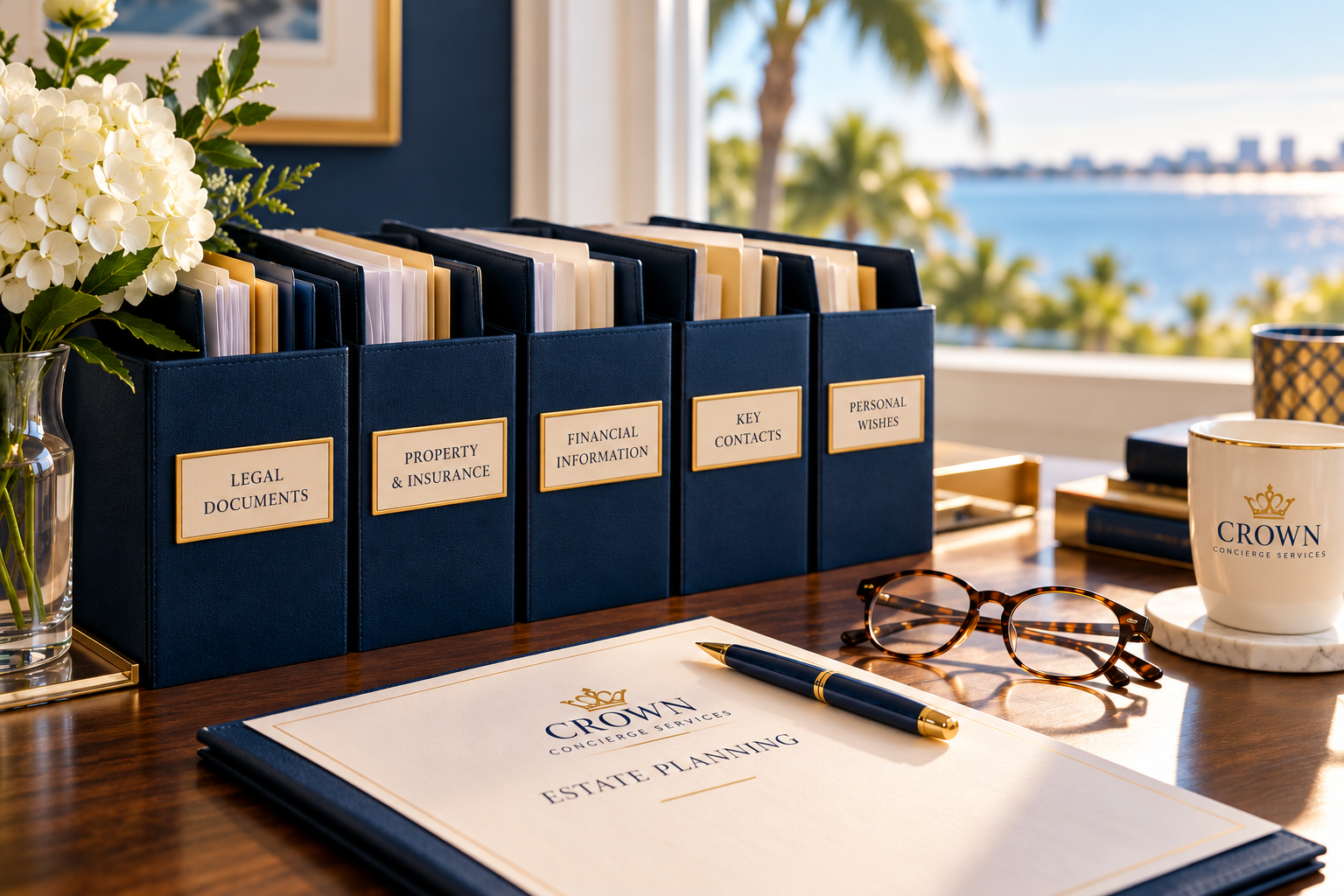
October brings two things to the Sarasota area. The first cars with northern plates start rolling back in, and National Estate Planning Awareness Week arrives in the third week of the month. One is a welcome sign of the season. The other is a gentle nudge most of us would rather ignore.
For many families, the hardest part of estate planning isn't the planning at all. It's the paperwork. The will was signed years ago, but where is it now? The power of attorney exists, but is it the current version? The insurance policies, the deed, the account list, the condo association contacts: they're scattered across a desk drawer up north, a filing cabinet on Longboat Key, and an email inbox nobody else can open.
Nobody wants to organize it. Until the day someone needs it.
Why This Matters More When You Live in Two Places
For returning snowbirds, documents tend to split down the middle. Half live in the northern home, half live here, and the one you actually need always seems to be in the other house. If a health event happens in February, will your family know where to find your health care surrogate designation? If your adult children fly in to help, can they locate the deed, the association contacts, or the spare keys?
Long-time residents face a different version of the same problem. After twenty or thirty years in one home, paperwork builds up in layers. Outdated policies sit beside current ones, and drafts sit beside originals. When a loved one has to step in, they're left sorting through decades of files during one of the most stressful weeks of their lives.
When Your Documents Were Signed in Another State
Many seasonal residents created their wills and powers of attorney years ago with an attorney back home. Those documents may still be perfectly valid. Even so, banks, hospitals, and other institutions here are often more familiar with Florida forms, and an unfamiliar document can slow things down at exactly the wrong moment.
If you've changed your legal residence to Florida, or you're thinking about it, that's a natural time to ask your attorney whether anything should be reviewed or updated. The same goes for buying or selling property here, or adding a Florida home to a trust.
The practical first step is simply knowing what you have and where it was signed. That's hard to do when half the paperwork lives in another state.
What "Organized" Actually Looks Like
A well-organized estate file doesn't need to be complicated. It needs to be findable, current, and known to the right people. At a minimum, that usually includes:
- Core legal documents: will or trust, durable power of attorney, health care surrogate designation, and living will
- Property records: deeds, title information, condo or HOA documents, and insurance policies
- Financial overview: a list of accounts and institutions, kept separate from passwords
- Key contacts: your attorney, financial advisor, CPA, insurance agent, and association office
- Household essentials: preferred vendors, alarm and access details, and where spare keys are kept
- Personal wishes: anything you want your family to know that isn't written in a legal document
Your attorney has already done the hard legal work. Good organization makes sure that work can actually be used when it matters most.
Sharing Access Without Sharing Everything
An organized file only helps if the right people know it exists. That doesn't mean handing your adult children every password and account statement. It means giving a few trusted people just enough to act when they need to.
A few simple practices go a long way:
- Tell the people you've named. Your health care surrogate and power of attorney agent should know they've been chosen and where the documents are kept.
- Create a one-page "where things are" sheet. List the location of originals, copies, and keys, along with your key contacts. Leave out account numbers and passwords.
- Keep passwords somewhere secure. A reputable password manager with an emergency access feature is far safer than a list taped inside a drawer.
- Know where your originals live. Some people keep original documents with their attorney, some in a home safe. A safe deposit box can be harder for family to open than many people expect, so ask your attorney what makes sense for you.
The goal is a family that can step in calmly, not one left searching under pressure.
Where a Lifestyle Concierge Fits In
This is exactly the kind of quiet, detail-heavy task that slides down the to-do list year after year, and exactly what Crown Concierge Services was built to handle.
Through our Estate Support service, we sit down with you in your home and work through the drawers, folders, and boxes together. We separate what's current from what's outdated, note any gaps you may want to raise with your attorney or advisor, and build a clear system (paper, digital, or both) that you and the family members you choose can navigate with confidence.
For snowbirds, we can keep the documents in your Florida home organized and ready, so everything is right where it should be when you return each fall. For full-time residents, this is your chance to finally tackle the file cabinet you've been meaning to sort for years.
The Signature You've Been Putting Off
Many estate documents need a notarized signature before they're complete. As a Florida mobile notary, I come to you: your condo, your home, your assisted living community, or a hospital room when timing matters. No driving across town, no waiting rooms, and no rescheduling around a parking garage.
Common requests include powers of attorney, health care documents, affidavits, and other personal documents that require notarization. Please note that as a notary, I can't provide legal advice or prepare legal documents. Your attorney drafts them, and I make sure the signing happens smoothly and on your schedule.
What to Expect at a Mobile Notary Visit
A mobile notary appointment is simple, and a little preparation keeps it that way:
- Have your documents ready, but unsigned. You'll sign in front of me, so please wait until the appointment.
- Have a current, government-issued photo ID for each person signing, such as a driver's license or passport.
- Ask your attorney about witnesses. Some documents require witnesses in addition to a notary. Let me know ahead of time so we can plan for it.
- Make sure every signer is present and ready. Each person needs to be alert, understand what they're signing, and sign willingly.
Most appointments take less time than the drive to an office would. For clients who are recovering from a procedure or who simply prefer to stay home, that convenience matters.
Make It a Fall Tradition
Organizing your documents once is a big step. Keeping them current is what makes the effort last. Many of our clients find it easiest to tie a quick review to a date they already notice, and the return to Florida each fall works perfectly.
A yearly check-in can be as simple as asking:
- Has anything changed in my family, such as a marriage, a divorce, a new grandchild, or a loss?
- Have I bought, sold, or refinanced property?
- Are the people I've named still the right people, and do they still live nearby?
- Have I opened or closed any accounts, or changed insurance?
- Is my "where things are" sheet still accurate?
If the answer to any of these is yes, that's your cue to update your file and talk with your attorney. If everything is the same, you've just confirmed your plan is ready, and that peace of mind is worth the half hour.
Start the Season Ahead
If you've just returned for the season, now is the ideal time to get this done, before the holidays, before family visits, and before the calendar fills up. If you're here year-round, let this week be the reminder you've been waiting for.
You don't have to organize it alone, and you don't have to wait until someone needs it.
Ready to get your paperwork in order? Schedule a consultation:
Call Crown Concierge Services at (941) 266-3399 or
Email amy@CrownConciergeServices.com or srqCrownConcierge@gmail.com
- estate planning
- document organization
- mobile notary
- snowbirds
- Sarasota
- Longboat Key
- Lakewood Ranch
- lifestyle concierge
Questions
- How do I organize my estate documents if I live in two states?
- Seasonal residents often have documents split between two homes. To stay organized, maintain a centralized file in your primary residence containing core legal documents, property records, and a list of key contacts. Create a one-page summary detailing where originals are kept, which helps family members or surrogates locate essential paperwork quickly during a health event or transition between properties.
- Do I need to update my will or power of attorney if I move to Florida?
- While documents signed in other states may remain valid, Florida institutions are often more familiar with local forms, which can prevent delays during emergencies. You should review your estate plan with an attorney if you change your legal residence to Florida, purchase local property, or add a Florida home to a trust to ensure all documents align with state statutes.
- What is included in a mobile notary service for estate planning?
- A mobile notary travels to your home, hospital, or assisted living facility to witness the signing of legal documents like powers of attorney and health care surrogates. You must provide current government-issued photo ID and wait to sign until the notary is present. This service offers convenience for those with limited mobility or busy schedules, ensuring documents are executed correctly.