
Halloween safety tips Sarasota
Halloween falls on a Saturday this year. Tips for safe driving, welcoming trick-or-treaters, pet safety, and Halloween etiquette for Sarasota homeowners.
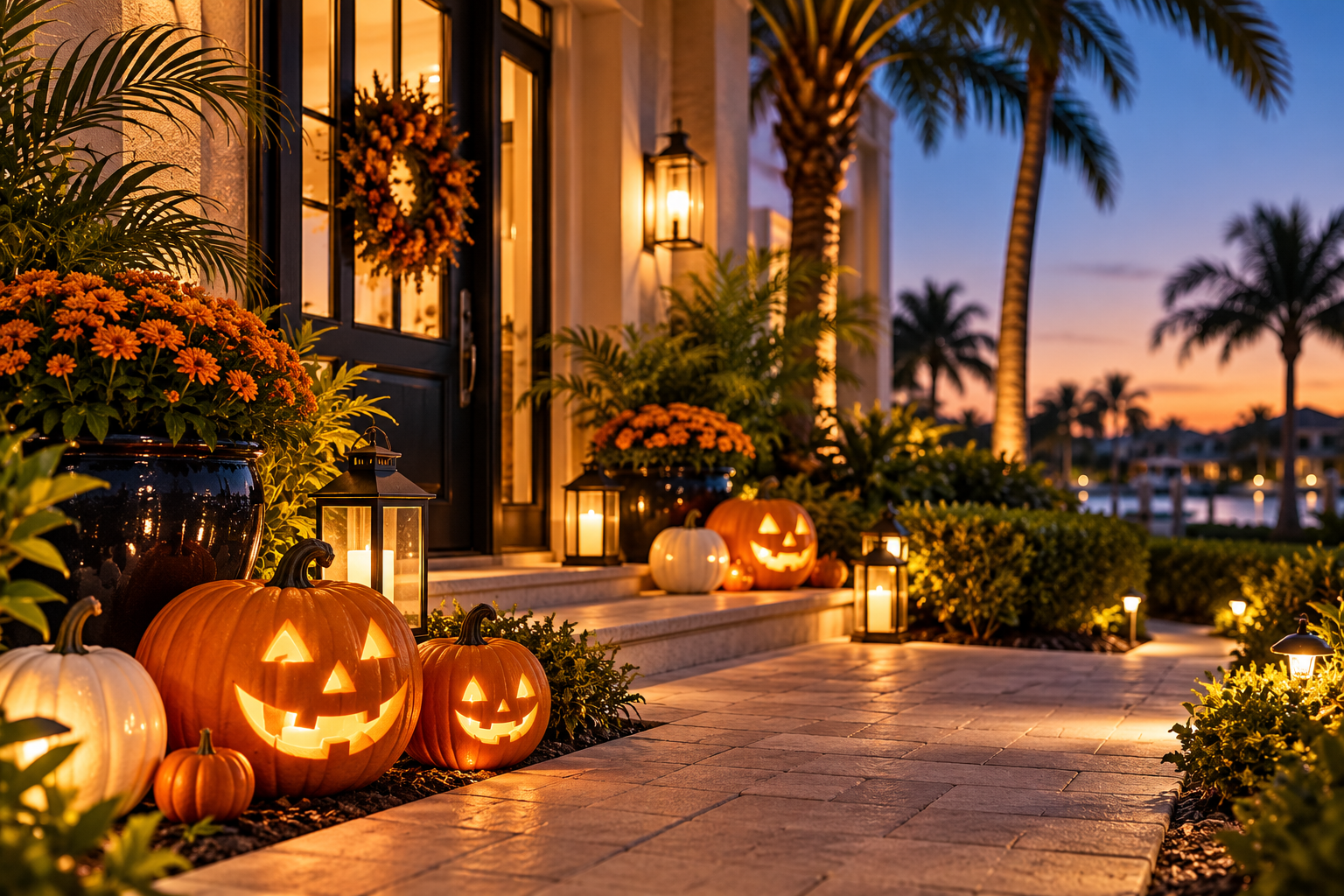
Halloween lands on a Saturday this year, and that changes the night. With no school the next morning, families will head out earlier, stay out later, and fill neighborhood sidewalks from late afternoon well into the evening. Add in the fact that clocks fall back just a few hours later, and October 31 becomes a busier night than usual.
Whether you're handing out candy, driving home from dinner, or still up north for a few more weeks, a little planning makes the evening easier for everyone. Here's how to get ready.
Driving Safely on Halloween Night
The biggest Halloween risk isn't a scary costume. It's a car moving through a neighborhood full of excited children. Kids in dark costumes and masks are hard to see, and they don't always look before they cross.
If you'll be on the road Saturday evening, keep these in mind:
- Slow down in residential areas. Drive well below the posted limit between late afternoon and about 9 p.m., when trick-or-treating is at its peak.
- Watch between parked cars. Children often step out from behind vehicles, mid-block rather than at crosswalks.
- Take extra care backing up. Pulling out of a driveway or garage is one of the most dangerous moments. Back out slowly and check twice.
- Turn your headlights on early. Sunset is just before 7 p.m., but dusk arrives sooner. Headlights help you see and help others see you.
- Put the phone away. A few seconds of looking at a screen is all it takes to miss a child in a dark costume.
- Plan a ride if you're celebrating. A Saturday Halloween means more parties. If you're drinking, arrange a driver or rideshare before you go out.
Getting Your Home Ready for Trick-or-Treaters
If you plan to hand out candy, a few small steps make your home welcoming and reduce the chance of a trip or fall:
- Light the path. Turn on porch and walkway lights, and replace any burned-out bulbs before Saturday.
- Clear the walkway. Move garden hoses, planters, bikes, and decoration cords out of foot traffic.
- Skip open flames. Use battery-operated candles or LED lights in pumpkins. Flowing costumes and real candles don't mix.
- Secure your decorations. Florida evenings can still be breezy, so anchor inflatables and hanging décor.
- Consider a teal pumpkin. A teal pumpkin signals that you offer non-food treats, like stickers or glow sticks, for children with food allergies.
- Not participating? Simply turn off your porch light. It's the widely understood signal that you won't be handing out candy.
Costume Safety for Kids
The right costume keeps the fun going all night. If you have children or grandchildren heading out, a few choices make a big difference:
- Make them easy to see. Add reflective tape to costumes and treat bags, and give each child a glow stick or bracelet. Bright colors are easier for drivers to spot than black.
- Choose face paint over masks. Masks can block side vision and make it hard to breathe. Use non-toxic face paint or makeup, and test a small patch on the skin first.
- Check the length. Costumes that drag on the ground are a tripping hazard, especially on curbs and steps. Hem anything that hangs too low.
- Pick comfortable shoes. Well-fitting sneakers beat costume shoes for a long walk through the neighborhood.
- Bring a flashlight. A small flashlight for every child helps them see the path and helps drivers see them.
- Keep props soft and short. Swords, wands, and other accessories should be flexible and blunt.
Finally, have kids wait until they're home to dig into their candy, so an adult can look through it first and set aside anything unwrapped or homemade from someone you don't know.
Halloween in Your Neighborhood
Single-family neighborhoods are where most of the trick-or-treating happens, and some streets see hundreds of visitors in a single evening. If you live in one of the area's popular neighborhoods, stock up on more candy than you think you'll need.
Many communities also have their own guidelines. HOA and deed-restricted neighborhoods may set trick-or-treating hours or rules for decorations, and gated communities may need a list of expected guests at the gate, so plan ahead if grandchildren or friends are coming to visit. On narrow streets, park in your driveway when you can to leave room for families walking by.
Condo living has its own etiquette. Many buildings don't allow door-to-door trick-or-treating in hallways and instead host a lobby candy table or clubhouse party. Check your association's newsletter for the plan, and let the front desk know if visitors are coming.
Wherever you live, be considerate of neighbors. Some enjoy the fun, while others would rather have a quiet evening.
Pets and Halloween
For many dogs and cats, Halloween is the most stressful night of the year. The doorbell rings constantly, strangers in masks appear at the door, and an open door is an easy escape route.
- Give pets a quiet room away from the front door, with water, a bed, and some soft background noise.
- Keep candy out of reach. Chocolate is toxic to dogs and cats, and xylitol, a sweetener found in some sugar-free gum and candy, is especially dangerous for dogs.
- Check ID tags and microchip details in case a pet slips out.
- Think twice about pet costumes. If your pet tolerates one, make sure it doesn't restrict breathing, movement, or vision.
If You're Not Home Yet
Many of our seasonal residents won't be back in Florida by October 31. An empty home on a busy night deserves a little attention:
- Put a few lights on timers so the home looks lived-in after dark.
- Hold or redirect deliveries. Packages sitting on a doorstep are easy to spot on a night when many people are walking by.
- Ask someone local to check in the next day to make sure everything is as you left it.
This is where a lifestyle concierge can help. We can accept deliveries, take care of small errands before you arrive, and visit your condo while you're away to look for anything that needs attention.
A Quick History of Halloween
Long before candy corn and costume parties, Halloween began with the ancient Celtic festival of Samhain. Celebrated around November 1, it marked the end of the harvest and the start of winter. People believed the boundary between the living and the dead grew thin that night, so they lit bonfires and wore disguises.
Centuries later, the church established All Saints' Day, also called All Hallows' Day, on November 1. The evening before became All Hallows' Eve, which was eventually shortened to Halloween.
Some traditions have surprising roots. In Ireland and Scotland, people carved faces into turnips and potatoes to ward off wandering spirits. When Irish immigrants arrived in America, they found pumpkins larger and easier to carve, and the jack-o'-lantern we know today was born. Trick-or-treating grew out of older customs of going door to door for food or treats, and by the mid-1900s it had become the neighborhood tradition so many of us remember.
Don't Forget to Fall Back
Daylight saving time ends at 2 a.m. on Sunday, November 1, just hours after the last trick-or-treaters head home. Before bed Saturday night, set your clocks back an hour and enjoy the extra sleep.
The time change is also a good reminder for a few small household tasks. Test your smoke and carbon monoxide detectors, replace their batteries, and check that your timers and thermostats have updated correctly.
With a little preparation, Halloween can be all treats and no tricks.
Need a hand getting ready for the season? Whether it's accepting deliveries, picking up seasonal décor, running errands before you arrive, or checking in on your home while you're away, Crown Concierge Services is here to help. Call (941) 266-3399 or email amy@crownconciergeservices.com to get started.
Serving Sarasota • Lakewood Ranch • Longboat Key and surrounding areas
- Halloween
- safety tips
- trick-or-treat
- pet safety
- snowbirds
- Sarasota
- Longboat Key
- Lakewood Ranch
- lifestyle concierge
Questions
- How can I prepare my home for trick-or-treaters?
- To ensure a safe environment, clear walkways of obstructions like hoses or planters and replace any burnt-out porch bulbs. Use battery-operated LED lights instead of candles in pumpkins to prevent fire hazards with costumes. If you prefer not to participate, simply turn off your exterior lights, which is the universal signal to bypass a home.
- What should I do for my pets on Halloween night?
- Halloween can be stressful for pets due to constant doorbells and strangers in masks. Keep them in a quiet, secure room away from the front entrance to prevent escapes. Ensure all candy, especially chocolate and items containing xylitol, is kept out of reach as these are toxic to dogs and cats. Always double-check that ID tags are current.
- What are the best safety tips for driving during trick-or-treating hours?
- Drivers should stay well below the speed limit in residential areas between late afternoon and 9 p.m. Use headlights early to increase visibility, put away mobile devices, and exercise extreme caution when backing out of driveways. Always look for children in dark costumes who may step between parked cars instead of using crosswalks.